The Hidden Risks of Chemical Drain Cleaners
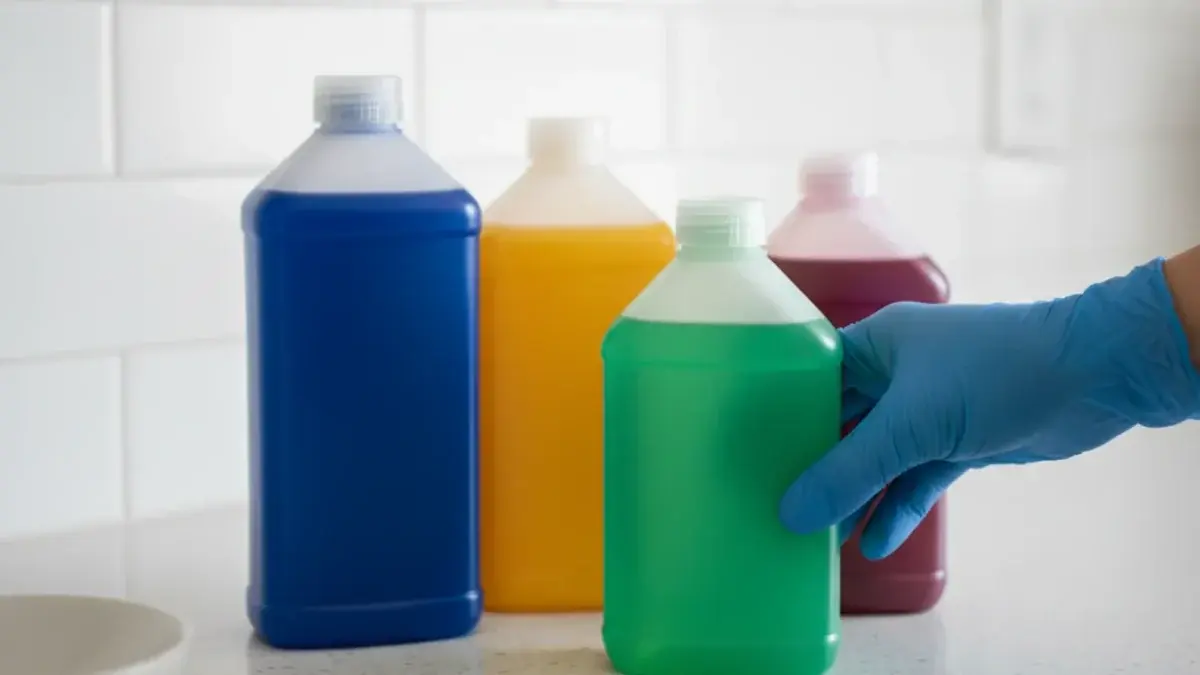
Quick answer: Chemical drain cleaners are risky because they generate heat and caustic reactions that can corrode and weaken pipes — especially older metal lines — while rarely removing the underlying buildup that caused the clog. They can also be hazardous to handle and harmful if a clog doesn't clear and the chemicals sit in the line. For stubborn or recurring clogs, professional drain cleaning or hydro jetting is both safer and more effective.
What chemical cleaners actually do to pipes
Most liquid drain cleaners work through aggressive chemical reactions that produce heat. Repeated use can corrode metal pipes, soften certain plastics, and degrade pipe joints. The damage is gradual and invisible until a line fails — which is why the convenience often costs more in the long run.
There are a few common types, and all carry trade-offs. Caustic cleaners (lye-based) generate heat to break down clogs and are hard on older metal. Acidic cleaners (often sulfuric acid) are even more aggressive and can attack pipe walls directly. Oxidizing cleaners (bleach- or peroxide-based) react with organic matter and can corrode metal over time. The heat from any of these is its own hazard — in a fully blocked line it has nowhere to dissipate and can soften or warp PVC.
Why they often don't solve the problem
Chemical cleaners may dissolve part of a soft clog, but they don't remove the grease layer, scale, or roots coating the pipe wall. The clog returns, you reach for the bottle again, and the cycle (and the pipe damage) continues. Heavy grease and roots are simply beyond what a chemical can handle.
There's also a deceptive middle ground: a cleaner that partially clears a clog can make the problem seem solved when the line is still badly narrowed. The drain limps along, you assume it's fixed, and then it backs up completely at the worst moment. Because chemicals work on the soft center of a blockage and not the hardened buildup on the wall, they rarely address what's actually shrinking the pipe.
The safety and environmental downsides
Beyond the pipes, these products are simply hazardous to have around. They can cause chemical burns and harmful fumes, and they're dangerous to mix — combining two different cleaners, or adding one to standing water that already contains another, can produce toxic gas. If a clog doesn't clear, you're left with a fixture full of caustic water that has to be handled with real care.
They're also rough on the environment and on septic systems, where the harsh chemistry disrupts the bacteria a septic tank relies on to function. For all these reasons, many plumbers simply don't recommend them as anything more than an occasional last resort on a minor, known clog.
Safer, more effective alternatives
For a minor clog, a plunger or simple mechanical clearing is safer. For anything stubborn or recurring, professional drain cleaning or hydro jetting removes the actual buildup without chemicals — water only. If you've already poured cleaner in and the clog won't budge, tell your plumber so they can work safely.
Simple maintenance habits prevent most clogs without any chemistry at all: strainers to catch hair and food, never pouring grease down the drain, and running hot water after dishwashing. When a clog does get ahead of you, water-based jetting clears it and cleans the pipe — solving the problem the chemical never could, and without the corrosion.
If you've already used a chemical cleaner
It's a common situation, and it's manageable. Stop adding more product, keep the area ventilated, and avoid contact with any standing water in the fixture. Most importantly, tell your plumber when you call (207) 419-2600 — knowing that caustic cleaner is in the line lets the technician take the right precautions to clear it safely. We'd rather know up front than be surprised by it.
When to call a professional
If a clog keeps returning, more than one drain is slow, or you're dealing with backups, odors, or roots, it's time for a professional look. A camera inspection pinpoints the cause and confirms whether hydro jetting is the right fix — call (207) 419-2600 for fast local service in Sterling Heights and nearby Metro Detroit.