Why Your Main Sewer Line Keeps Clogging
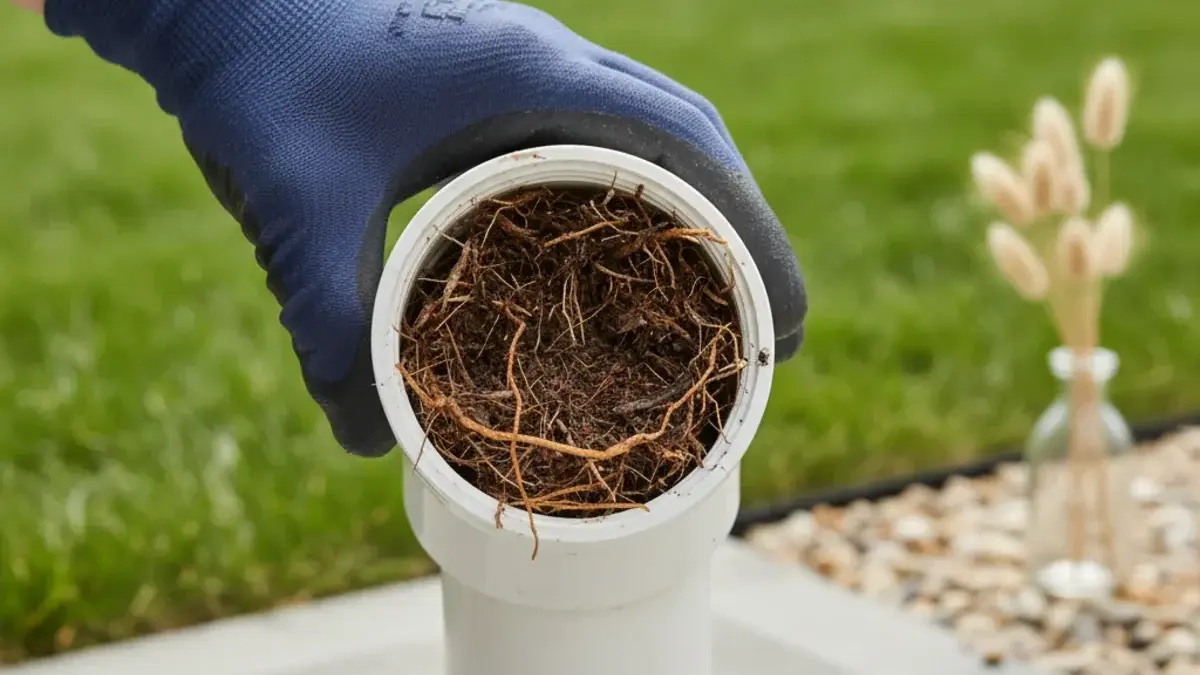
Quick answer: A main sewer line that keeps clogging almost always has a root cause that snaking doesn't address: tree roots growing into the pipe, grease and sludge coating the walls, or mineral scale narrowing the line. Snaking punches through the blockage but leaves the buildup, so the clog returns. Hydro jetting scours the entire line clean, and a camera inspection reveals whether you're dealing with roots, grease, or a structural issue that needs repair.
The usual culprits
Recurring main-line clogs typically trace back to one of a few causes.
- Tree roots intruding through joints and cracks
- Grease and sludge built up on the pipe wall
- Mineral scale from years of hard water
- A sag or 'belly' in the line that collects debris
- Damaged or collapsed pipe sections
How to tell which cause is yours
The pattern of the problem often hints at the cause. Clogs that return seasonally and come with gurgling are classic roots — they grow most actively in warmer months. A line that backs up faster after grease-heavy cooking or laundry points to grease and sludge on the wall. Gradual, year-round slowing across an older home suggests scale narrowing the pipe. And a clog that always recurs in the same spot regardless of habits can indicate a sag or a damaged section collecting debris.
These are clues, not diagnoses. The only way to know for certain is a camera inspection, which shows the actual condition of the line — whether you're looking at a root mass at a joint, a greased-over wall, or a structural flaw — so the fix matches the real problem rather than a guess.
Why snaking keeps failing
A cable auger clears a channel through the blockage so water flows again — temporarily. But the grease, roots, and scale that caused the clog are still there, so the line blocks again within weeks or months. It's a cycle that only ends when the buildup itself is removed.
There's a financial trap in this cycle, too. Each individual snaking is inexpensive, so it feels like the reasonable choice — but repeating it several times a year on a line that never actually gets clean often costs more over a couple of years than addressing the cause once. The recurring bill is the line telling you the method isn't matched to the problem.
The lasting fix
Hydro jetting cleans the full pipe wall, removing the buildup that causes repeat clogs. Paired with a camera inspection, it also confirms whether the problem is purely buildup or something structural. For root-prone lines, a preventive jetting schedule prevents the cycle from restarting.
If the camera reveals a sag, a collapsed section, or a broken joint, jetting will clear what it can but won't fix the underlying defect — and an honest provider will tell you that rather than selling you repeat cleanings that can't solve it. In those cases a spot repair or trenchless liner is the real answer. The goal is to break the clog cycle for good, whether that's a thorough jetting, a maintenance interval, or a targeted repair.
What to do at the first repeat clog
If your main line has backed up more than once, treat the second clog as the signal to stop snaking and start diagnosing. A camera inspection at that point pinpoints the cause before it escalates into a full backup — sewage in your lowest level is a far worse and costlier situation than a planned cleaning. Call (207) 419-2600, describe how often it's happened and which drains are affected, and we'll recommend the right next step for your line.
When to call a professional
If a clog keeps returning, more than one drain is slow, or you're dealing with backups, odors, or roots, it's time for a professional look. A camera inspection pinpoints the cause and confirms whether hydro jetting is the right fix — call (207) 419-2600 for fast local service in Sterling Heights and nearby Metro Detroit.