Can Hydro Jetting Remove Tree Roots?
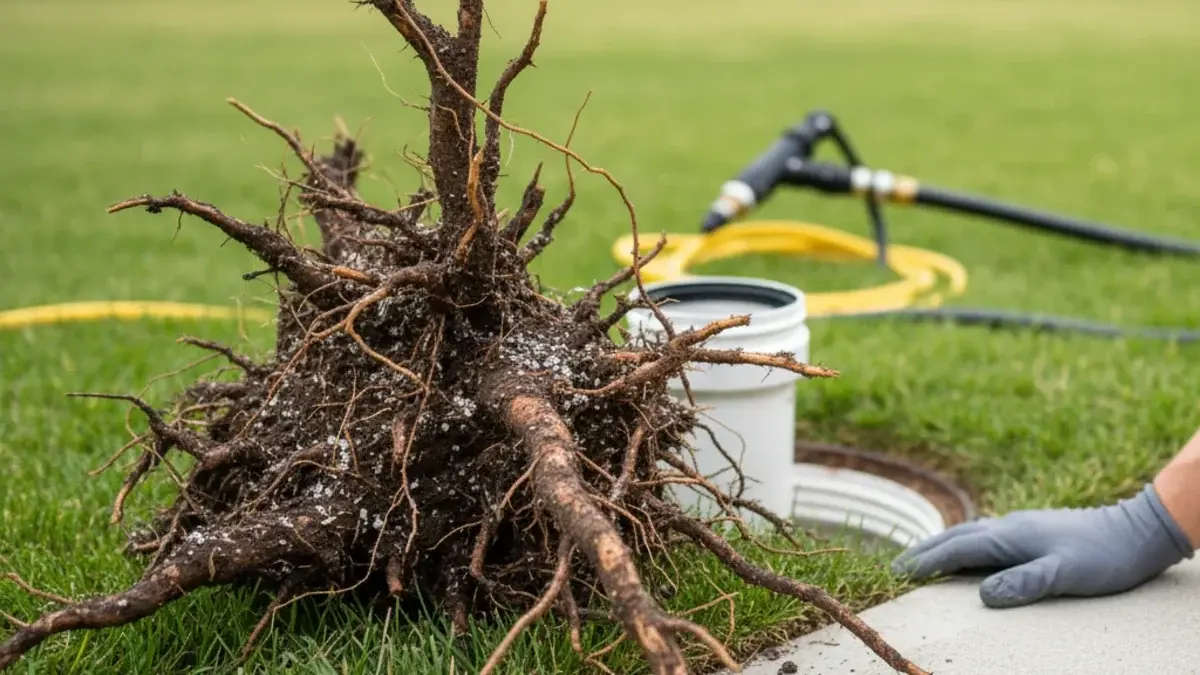
Quick answer: Yes — hydro jetting can remove tree roots from sewer lines using specialized root-cutter nozzles that slice through the root mass and flush it out while scouring the pipe wall. It's one of the most effective ways to clear roots without digging. Because the source tree remains, roots can eventually regrow, so a camera inspection and, in some cases, a preventive jetting schedule help keep them from causing repeat backups.
Why tree roots invade sewer lines
Roots seek out the moisture and nutrients inside sewer pipes, working into tiny cracks and joints. Once inside, they expand into dense masses that catch debris and block flow. In older Sterling Heights neighborhoods with mature trees, root intrusion is one of the most common causes of recurring main-line clogs.
It's worth understanding that the roots aren't attacking the pipe at random — they're following exactly what they need. A sewer line carries warm, moist, nutrient-rich water, and to a tree that's an ideal resource in dry soil. The slightest seep at a pipe joint sends a chemical signal the roots grow toward, and once a fine root hair finds the opening, it thickens and branches inside the pipe where conditions are perfect. That's why even a tiny gap can eventually host a root mass that fills the line.
How root-cutter jetting works
A root-cutter nozzle uses rotating, high-pressure jets to cut through the root mass and clear the pipe. Unlike a cable that may only bore a hole through the roots, jetting removes the intrusion and scours away the debris and buildup caught in it, restoring full flow.
The rotating jets act like a high-pressure blade spinning against the full inside surface of the pipe, shearing roots off close to the wall and flushing the pieces downstream to the sewer. Because the nozzle cleans the entire circumference rather than punching a single channel, it clears far more of the intrusion in one pass — and removes the sediment and grease the roots had trapped, which is often part of the blockage too.
Jetting vs. a mechanical root cutter
Plumbers have long used mechanical root augers — a cable with spinning blades — to deal with roots, and they do cut. The difference is thoroughness. A mechanical cutter clears a path roughly the width of its blades, leaving root material around the rest of the pipe to regrow quickly. Hydro jetting cuts the full mass and washes the residue out, so the line is genuinely cleared rather than partially trimmed. On a root-prone line, that usually means longer intervals between recurrences.
Keeping roots from coming back
Since the tree is still there, roots can return. A camera inspection tracks the pipe's condition, and a preventive jetting schedule keeps regrowth from reaching the blockage stage. If the intrusion is severe or the pipe is damaged at the joint, a repair conversation may be warranted.
For most root-prone lines, the practical plan is a maintenance interval — often every one to two years depending on how aggressive the regrowth is — combined with a periodic camera check. This keeps roots cut back before they can choke the line and lets you watch for any change in the joint that might eventually call for a spot repair or a trenchless liner. The aim is staying ahead of the roots rather than reacting to the next backup.
When the pipe itself is the problem
Roots get in through a flaw — a loose joint, a crack, or an offset section — and sometimes that flaw is significant enough that cleaning alone won't keep them out for long. If a camera inspection shows a badly broken or separated joint, the long-term answer may be a repair or a trenchless pipe liner that seals the entry point. We'll show you the footage and lay out the options honestly, so you can weigh ongoing maintenance against a one-time fix with full information.
When to call a professional
If a clog keeps returning, more than one drain is slow, or you're dealing with backups, odors, or roots, it's time for a professional look. A camera inspection pinpoints the cause and confirms whether hydro jetting is the right fix — call (207) 419-2600 for fast local service in Sterling Heights and nearby Metro Detroit.