Snaking vs Hydro Jetting for Tree Roots
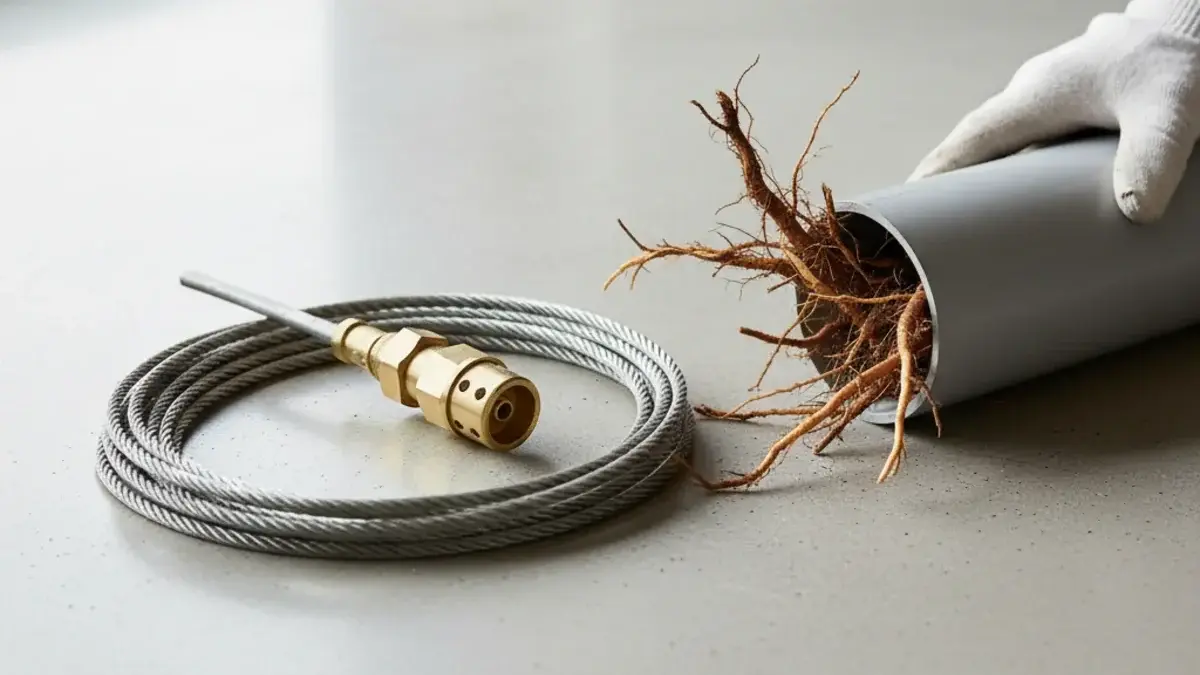
Quick answer: For tree roots, hydro jetting generally outperforms snaking. A cable auger with a cutting head can punch through a root mass and restore flow temporarily, but it often leaves root fragments and the surrounding debris behind, so roots regrow and reblock the line quickly. Root-cutter hydro jetting slices through the roots and flushes them out while scouring the pipe wall, giving a more complete clearing that lasts longer — especially when paired with a camera inspection and preventive schedule.
What snaking does to roots
A rooter machine bores a hole through the root mass so water flows again. It's quick and can relieve an immediate blockage, but it doesn't remove the full intrusion or the debris caught in it, so the roots fill back in — sometimes within months.
A mechanical root cutter clears roughly the width of its spinning blades — a channel through the mass — while root material around the rest of the pipe stays anchored at the joint and keeps growing. Because roots regrow from what's left rather than starting over, that remaining material fills the channel back in relatively quickly. Snaking buys real but short-lived relief, which is why a root clog cleared this way tends to return on a frustratingly regular cycle.
Why jetting clears roots better
Root-cutter jetting nozzles cut through the roots and the high-pressure water flushes the fragments and trapped debris out, leaving the pipe wall clean. The result is a more thorough clearing. Because the source tree remains, a camera inspection and periodic preventive jetting keep regrowth from causing repeat backups.
The rotating cutting jets shear roots off close to the pipe wall around the full circumference, not just along a single bored path, and the water volume carries the fragments downstream rather than leaving them to re-anchor. Jetting also scours out the sediment and grease the root mass had trapped, which is often part of the blockage. A more complete clearing means a longer interval before the roots can rebuild — the practical advantage over a mechanical cutter on a root-prone line.
The honest limit: the tree is still there
Neither method removes the source. As long as a living tree sits over the line, roots will keep seeking the moisture inside it and will eventually return — jetting clears them more completely and buys more time, but it isn't permanent any more than snaking is. That's not a knock on jetting; it's the reality of root intrusion. It's also why the right plan for a root-prone line pairs jetting with a maintenance interval rather than treating any single cleaning as a final fix.
When the joint needs more than cleaning
Roots enter through a flaw — a loose or offset joint, a crack — and sometimes that opening is significant enough that no cleaning interval will keep them out for long. A camera inspection shows the condition of the joint; if it's badly broken, the durable answer may be a spot repair or a trenchless liner that seals the entry point. We'll show you the footage and lay out the trade-off between ongoing maintenance and a one-time repair so you can decide with full information. Call (207) 419-2600 if roots keep returning to the same spot.
When to call a professional
If a clog keeps returning, more than one drain is slow, or you're dealing with backups, odors, or roots, it's time for a professional look. A camera inspection pinpoints the cause and confirms whether hydro jetting is the right fix — call (207) 419-2600 for fast local service in Sterling Heights and nearby Metro Detroit.