Hydro Jetting vs Snaking: Which Do You Need?
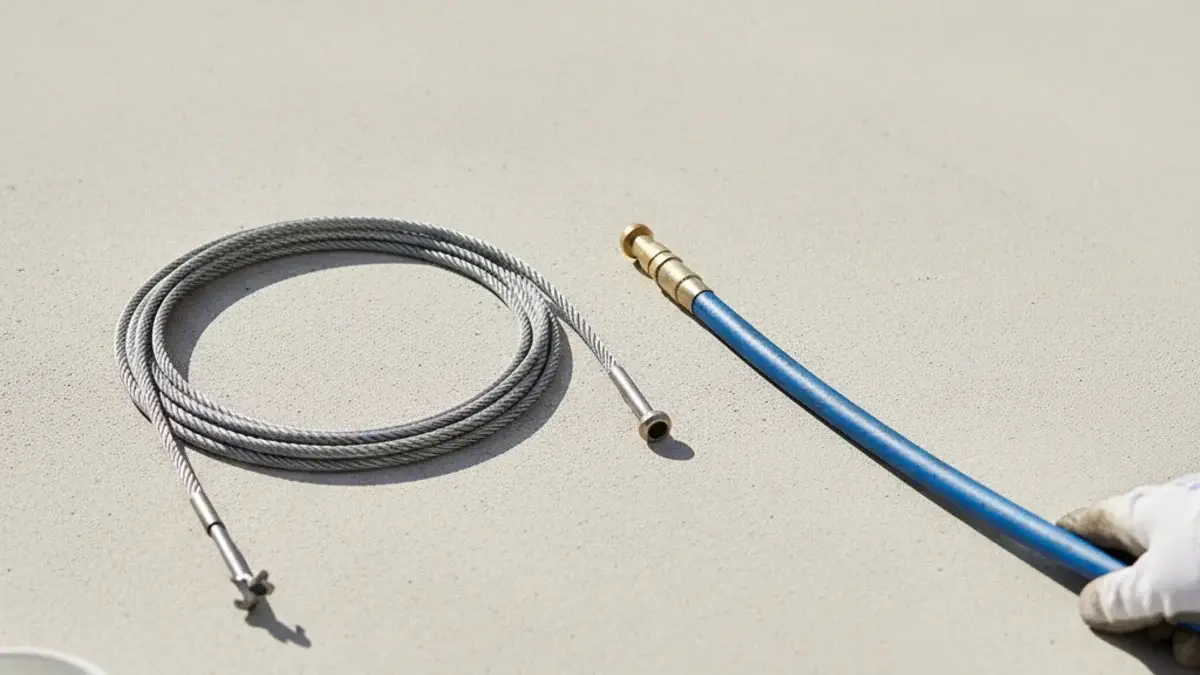
Quick answer: The difference comes down to what each method does to the pipe. A drain snake (cable auger) punches a hole through a clog to restore flow but leaves the surrounding buildup in place — so the clog often returns. Hydro jetting uses high-pressure water to scour the entire pipe wall clean, removing grease, scale, and roots, so results last much longer. For light, localized clogs, snaking may be enough; for recurring, heavy, or grease- and root-related blockages, jetting is the better choice.
What a drain snake actually does
A drain snake — also called a cable auger — is a long, flexible steel cable with a cutting or grabbing head on the end. It's fed into the line and spun by a motor or by hand so the head chews through or hooks the clog and restores flow. It's the tool most plumbers reach for first on a routine blockage, and for good reason: it's fast, inexpensive, and effective at clearing a discrete obstruction near the drain opening.
Its limitation is mechanical. The cable bores a hole through the blockage and pulls back out, but it doesn't clean the pipe wall. The grease, scale, and biofilm coating the inside of the line — the stuff that narrowed the pipe and caught the clog in the first place — stays right where it was. That's why a snaked line so often slows down again.
What hydro jetting does differently
Hydro jetting attacks the problem from the opposite direction. Instead of boring through the center of a clog, it uses high-pressure water through a specialized nozzle to scour the entire circumference of the pipe, cutting grease and scale loose, slicing through roots, and flushing everything downstream. The result is a pipe restored close to its original inside diameter — not a channel through a still-coated line.
That difference in approach is the whole story behind why results last longer. Jetting removes the cause of the clog; snaking removes the symptom. For a line that's genuinely dirty, only one of those keeps the drain clear for the long run.
Side-by-side comparison
Both methods clear clogs, but they're suited to different problems. Snaking is fast and inexpensive for a simple blockage near a fixture. Jetting is more thorough and longer-lasting for buildup throughout the line.
- Snaking: punches through the clog, lower upfront cost, best for simple localized blockages
- Jetting: scours the full pipe wall, longer-lasting, best for grease, roots, scale, and recurring clogs
- Snaking can scratch fragile older pipes if misused; jetting (after inspection) uses water only
- Snaking often needs a repeat visit; jetting addresses the cause
When snaking is the right call
If you have a single slow drain — a bathroom sink clogged with hair, say — snaking is often the practical, economical fix. There's no need to jet a line that just has a localized blockage near the opening.
Snaking also makes sense as a first, low-cost attempt when the cause is unknown and the symptoms are mild. If it clears the problem and the drain stays clear, great — you've solved it cheaply. The key is paying attention to what happens next: a clog that comes right back is telling you the real issue is buildup the cable left behind.
When hydro jetting wins
If the same line keeps clogging, if multiple drains are slow, or if grease and roots are involved, jetting is worth it. Snaking that line repeatedly costs more over time and never solves the underlying buildup. Jetting removes the cause, not just the symptom.
Jetting is also the better tool whenever you want a genuinely thorough or preventive clean — before selling a home, after recurring trouble, or on a commercial line where a mid-service backup is unacceptable. In Sterling Heights' older neighborhoods and grease-heavy restaurant corridors, these are common situations.
The cost question over time
Snaking is cheaper for a single visit, and that makes it the obvious choice for a one-off clog. But on a line with heavy buildup, repeat snaking adds up: pay for it three or four times in a couple of years and the 'cheaper' option can quietly cost more than one thorough jetting would have — without ever fixing the underlying narrowing. When you weigh cost, weigh it over time, not just per visit.
How to decide
A simple rule of thumb: if it's the first time a particular drain has clogged and the blockage seems localized, start with snaking. If the clog keeps returning, several drains are affected, or you know grease or roots are in play, go with jetting — and let a camera inspection confirm what's really happening before committing. When you're not sure, describe the situation when you call (207) 419-2600 and we'll recommend the method that actually fits, not the more expensive one.
When to call a professional
If a clog keeps returning, more than one drain is slow, or you're dealing with backups, odors, or roots, it's time for a professional look. A camera inspection pinpoints the cause and confirms whether hydro jetting is the right fix — call (207) 419-2600 for fast local service in Sterling Heights and nearby Metro Detroit.