How Grease Builds Up in Drains (and How to Stop It)
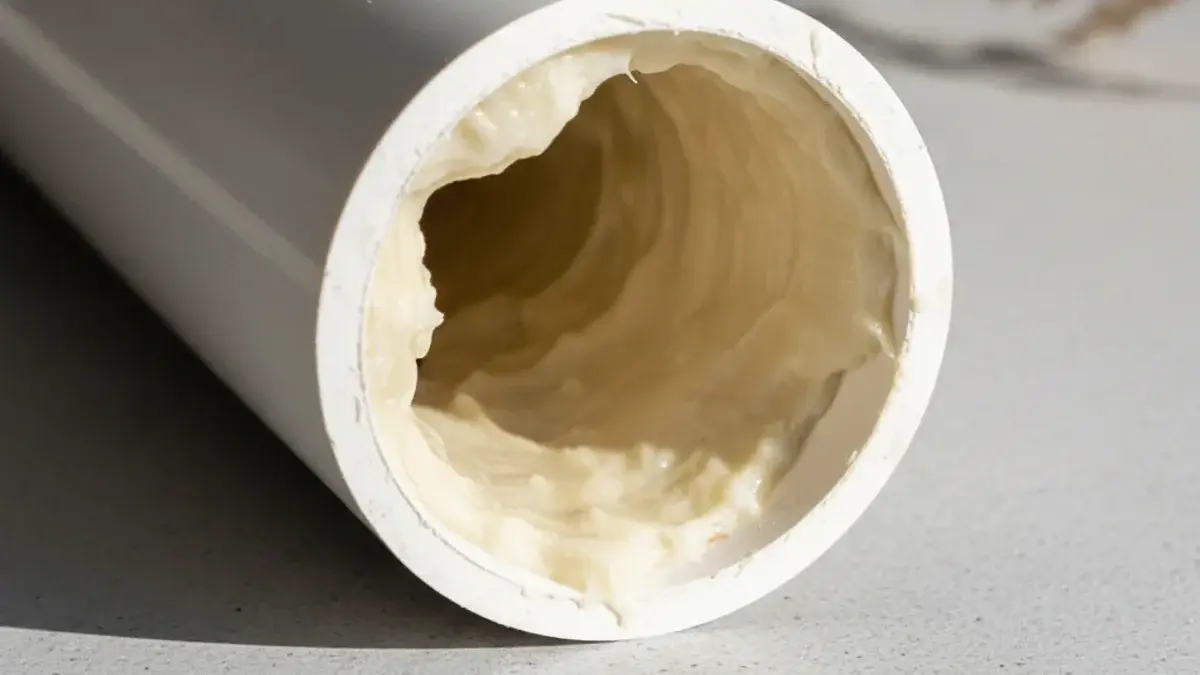
Quick answer: Grease builds up in drains because fats, oils, and grease (FOG) go down warm and liquid, then cool and solidify on the pipe wall into a sticky layer that traps food and other debris. Over time this layer thickens until it blocks the line. The most thorough way to remove established grease buildup is hydro jetting, which emulsifies and flushes it out; prevention means keeping grease out of the drain in the first place.
The science of a grease clog
Liquid grease seems harmless going down the drain, but as it travels through cooler pipe it congeals and sticks. Each pour adds another layer, and the rough surface catches food particles and soap scum. Eventually the pipe narrows enough to clog — usually at a bend or a cooler section of the line.
The reason it's so deceptive is the temperature change. Bacon fat, oil, and pan drippings pour like water when hot, so they seem to wash away — but a drain line runs far cooler than a stovetop, and the grease begins solidifying within a few feet of the sink. Cold water makes it worse, hardening the fat on contact; hot water and soap only delay the inevitable by carrying softened grease a little further down to re-congeal out of sight. Layer by layer, the deposit builds toward a blockage.
Where and why it clogs
Grease doesn't deposit evenly — it collects fastest wherever the line slows or cools. Bends, low spots, long horizontal runs, and the cooler sections farther from the house are the usual trouble spots, which is why a kitchen clog is often well downstream of the sink rather than right under it. A garbage disposal compounds the problem by feeding food solids into an already-greasy line, where they stick to the coated walls and accelerate the narrowing.
Removing and preventing it
For existing buildup, hydro jetting is the standard fix — it strips the grease off the full pipe wall. To prevent it: scrape plates before washing, never pour cooking grease down the drain (collect and discard it), use a strainer, and run hot water after dishwashing. For commercial kitchens, preventive jetting and grease-trap maintenance are essential.
It's worth being clear about why jetting specifically: hardened grease is bonded to the entire circumference of the pipe, and a cable auger only bores a channel through the center, leaving the layer behind to clog again. High-pressure water emulsifies and scours grease off the whole wall and flushes it downstream, restoring the full diameter. For grease, it's really the only method that removes the cause rather than poking through it.
Habits that keep a line clear
The single best prevention is keeping FOG out of the drain entirely: pour cooled cooking grease into a can or jar and throw it in the trash rather than down the sink, wipe greasy pans with a paper towel before washing, and use a sink strainer to catch food scraps. Run hot water after dishwashing as a minor help — but don't rely on it as a solution. If a kitchen line has clogged more than once despite good habits, the grease layer is already established and a thorough jetting resets it. Call (207) 419-2600 to clear a grease-clogged line for good.
When to call a professional
If a clog keeps returning, more than one drain is slow, or you're dealing with backups, odors, or roots, it's time for a professional look. A camera inspection pinpoints the cause and confirms whether hydro jetting is the right fix — call (207) 419-2600 for fast local service in Sterling Heights and nearby Metro Detroit.