How to Prevent Grease Clogs in Commercial Kitchens
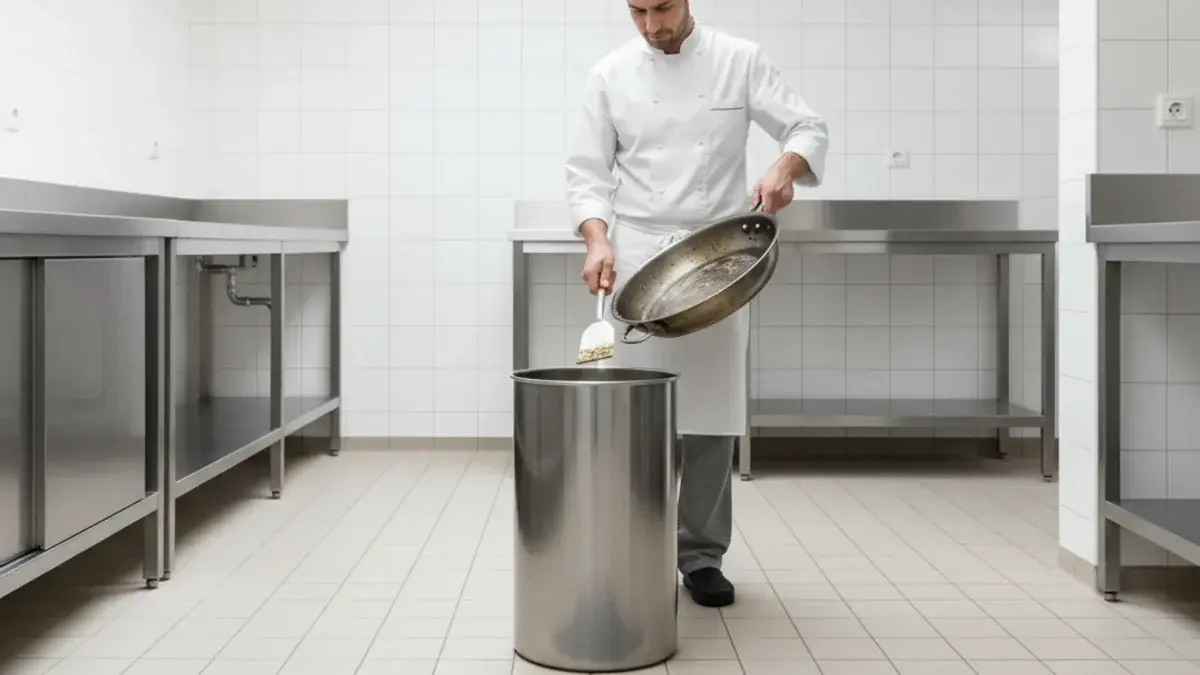
Quick answer: Preventing grease clogs in a commercial kitchen comes down to keeping fats, oils, and grease (FOG) out of the drains and maintaining the lines that do receive grease. That means scraping and dry-wiping cookware before washing, properly disposing of used cooking oil, maintaining the grease trap on schedule, training staff on good drain habits, and putting grease-heavy lines on a preventive hydro jetting schedule so buildup never reaches the backup stage.
Keep grease out of the drains
The biggest lever is reducing how much FOG enters the system: scrape plates and pans into the trash, dry-wipe greasy cookware before it hits the sink, collect used fryer oil for proper disposal or recycling, and use drain screens to catch food solids. Staff training makes these habits consistent across shifts.
It helps to understand why FOG is so destructive: hot grease pours like a liquid but cools and solidifies on the pipe wall, layering up over weeks into a hard, flow-choking deposit. Hot water and detergent don't truly solve it — they just push softened grease a little further down to re-harden out of sight. So the only reliable prevention is keeping it out of the drain in the first place, which is entirely a matter of consistent habits at the dish pit and prep stations.
Don't rely on hot water and detergent
A common kitchen myth is that running plenty of hot water and soap 'melts the grease away.' It doesn't — it relocates it. The grease re-congeals further along the line, often in a spot that's harder to reach, and the buildup continues out of view until the line backs up. Dish soap and degreasers emulsify grease only briefly; once the water cools in the pipe, the FOG comes right back out of solution. Treat hot-water flushing as a non-solution and focus on capture and disposal instead.
Maintain traps and jet on a schedule
Service the grease trap on its required schedule so it actually captures FOG. Even so, some grease gets downstream, so put grease-heavy lines on a preventive jetting schedule (often quarterly to semi-annually). The combination — good habits, trap maintenance, and scheduled jetting — keeps commercial kitchen lines reliably clear and avoids costly mid-service backups.
Think of it as three layers of defense: staff habits keep most FOG out, the grease trap captures much of what slips through, and periodic jetting clears whatever still makes it into the lines. No single layer is enough on its own — a well-maintained trap still passes some grease downstream — but together they keep a kitchen's drains reliably clear.
What a prevention plan looks like
A practical plan combines a written staff routine (scrape, dry-wipe, screen, dispose), a trap-cleaning schedule that meets local requirements, and a jetting interval matched to the kitchen's volume — typically quarterly for a busy operation, semi-annual for a lighter one, adjusted based on what the lines look like between visits. The payoff is avoiding the worst-case scenario every operator dreads: a grease backup during a packed service, with a closed kitchen and a health-code problem. Call (207) 419-2600 to set up a schedule for your kitchen.
When to call a professional
If a clog keeps returning, more than one drain is slow, or you're dealing with backups, odors, or roots, it's time for a professional look. A camera inspection pinpoints the cause and confirms whether hydro jetting is the right fix — call (207) 419-2600 for fast local service in Sterling Heights and nearby Metro Detroit.