High-Pressure Water Jetting: How the Technology Works
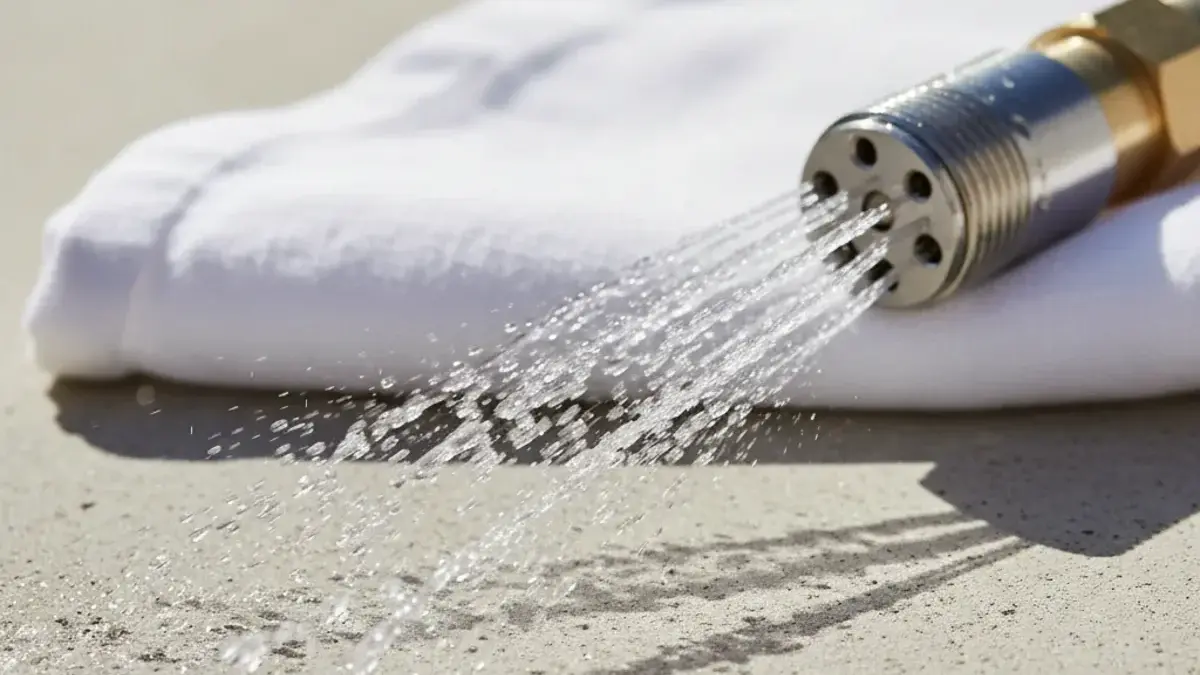
Quick answer: High-pressure water jetting works by combining pressure (measured in PSI) and flow (measured in gallons per minute, or GPM) to both cut through blockages and flush them away. A pump pressurizes water that exits a specialized nozzle as concentrated jets — forward jets break the clog, rear jets propel the hose and scour the pipe wall. It's effective because water, at the right pressure and volume, removes the grease, scale, and roots coating a pipe far more completely than a mechanical cable can.
PSI, GPM, and nozzles
Two numbers define a jetter's capability: PSI (pressure), which provides the cutting and scouring force, and GPM (flow), which carries debris away. Both matter — high pressure cuts, high flow flushes. Nozzles direct the water: forward jets attack the blockage, angled rear jets clean the pipe wall and drive the hose forward. Different nozzles suit grease, general buildup, or roots.
It's worth understanding how the two numbers work together, because neither alone does the job. Pressure is what shears grease, scale, and roots off the pipe wall — for drain and sewer work that's often up to roughly 4,000 PSI. Flow is what then carries all that loosened material downstream and out to the sewer. A machine with high pressure but low flow would cut buildup loose and leave it sitting in the line; high flow with low pressure would push debris without removing what's bonded to the wall. A capable jetter balances both, and a trained technician sets them to suit the pipe at hand.
How the nozzle does the work
Most of a jetter's versatility lives in the nozzle on the end of the hose. The rear-facing jets do two jobs at once: they propel the hose forward through the pipe and scour the wall as they pass, while any forward jets punch through a blockage ahead. Swapping nozzles tunes the tool to the problem — a penetrator concentrates force forward to break through a full blockage, a rotary (spinner) nozzle sprays rotating jets that scour grease and scale evenly off the entire circumference, and a root-cutter slices through invasive roots. One machine handles very different jobs just by changing the tip.
Why water out-cleans a cable
A mechanical cable contacts only the center of the clog, boring a hole through it. High-pressure water reaches the entire pipe wall, stripping off the grease, scale, and biofilm that a cable leaves untouched. That's why jetting restores the full pipe diameter and why results last longer.
The contrast comes down to coverage. A cable is a single point of contact pushed through the middle of an obstruction; it can clear a discrete blockage but leaves the coating on the rest of the wall, so the line stays narrowed. Water under pressure acts on the whole circumference at once, removing the buildup itself rather than poking a channel through it. That's the fundamental reason jetting both lasts longer and cleans more completely on grease, scale, and roots — it treats the cause, not just the symptom.
Why it's safe when done right
High pressure sounds alarming for a pipe, but in trained hands it's controlled and pipe-appropriate. The technician matches pressure and nozzle to the line's material, diameter, and condition — a gentler approach on a sound older line than on robust modern pipe — and, critically, a camera inspection first confirms the pipe can take the pressure before any water goes in. It's also water alone, with none of the corrosive chemistry of caustic drain cleaners. That combination of adjustable settings and camera verification is what makes the technology both powerful and safe across the range of pipe found in real homes. Call (207) 419-2600 to learn more.
When to call a professional
If a clog keeps returning, more than one drain is slow, or you're dealing with backups, odors, or roots, it's time for a professional look. A camera inspection pinpoints the cause and confirms whether hydro jetting is the right fix — call (207) 419-2600 for fast local service in Sterling Heights and nearby Metro Detroit.