What Happens During a Sewer Camera Inspection
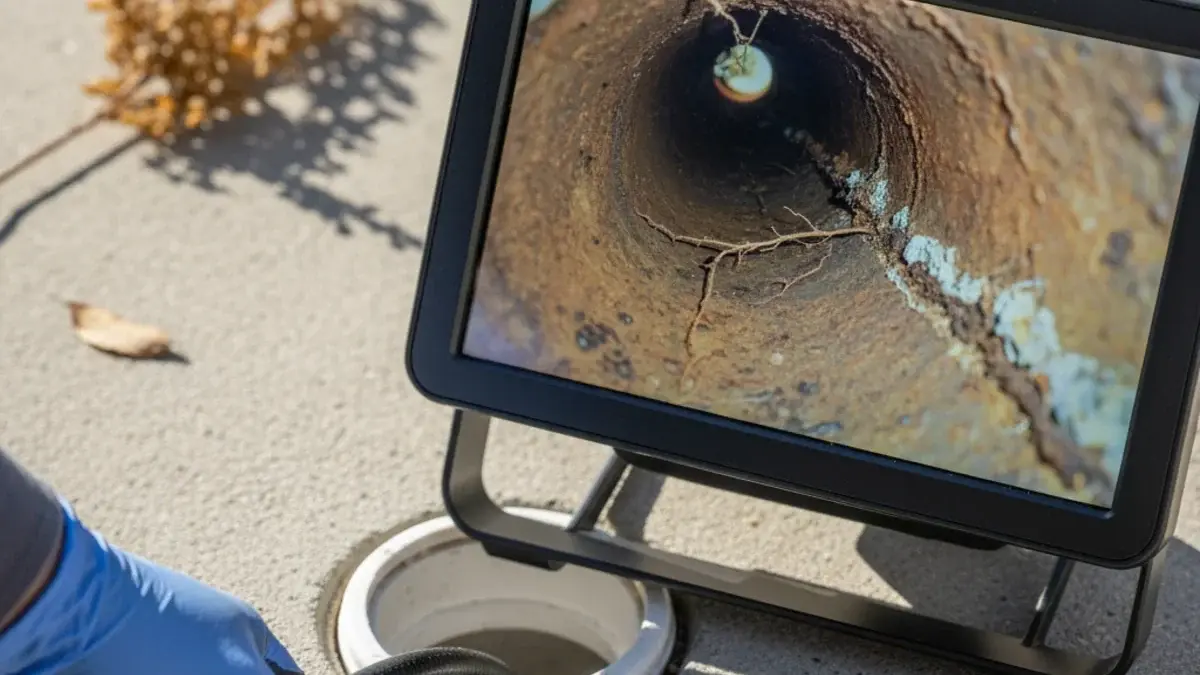
Quick answer: During a sewer camera inspection, a technician feeds a flexible, high-resolution video camera through an access point or cleanout into your line. As the camera travels, it sends live video showing the pipe's interior — the location and type of any blockage, root intrusion, scale, or damage — and a locator can pinpoint a problem spot's exact position and depth underground. It's a non-invasive way to diagnose precisely what's wrong before any work begins.
Step by step
The technician locates a suitable access point, inserts the camera head on a flexible rod, and advances it through the line while watching the feed. You can see the same video. If a problem is found, a locator device traces the camera's position from above ground, marking exactly where to focus the cleaning or repair.
The camera head is self-illuminating and waterproof, mounted on a coiled push-rod that feeds smoothly through bends in the pipe. As it travels, the high-resolution feed shows the pipe wall in real time — you'll see grease coating, scale deposits, root masses pushing through a joint, standing water that signals a sag, or a crack or offset where two sections meet. Nothing is hidden or inferred; you're looking directly at the inside of your line.
How problems are located underground
When the camera reaches a problem, the technician notes the distance fed in and uses a locator — a handheld receiver that detects a transmitter (sonde) in the camera head — to pinpoint the spot from the surface. This marks the exact position and depth of the issue in the yard or under the slab. That precision is what makes the difference between digging blindly across a lawn and, if a repair is ever needed, accessing the one spot that requires it.
Why it matters before jetting
The inspection confirms whether the pipe is sound enough for high-pressure jetting, distinguishes a simple clog from a structural problem, and shows the exact nature of the blockage so the right nozzle and pressure are chosen. After cleaning, a second pass can verify the line is genuinely clear.
This is the safeguard that makes jetting appropriate for older pipe. Putting high pressure into a line of unknown condition is a gamble; doing it after a camera confirms the pipe can take it is routine. And the verification pass afterward means you're not taking anyone's word that the line is clear — you can see it.
When to get one
Recurring clogs, before jetting an older line, before buying a home, or any time the cause of a drain problem is unclear. It's one of the most useful diagnostic steps in plumbing.
The pre-purchase inspection is worth singling out: a sewer lateral is expensive to repair and entirely invisible during a normal home showing, so a camera inspection before buying can reveal roots, sags, or a failing line before they become the new owner's problem. For any home more than a few decades old, it's cheap insurance against an unpleasant surprise.
When to call a professional
If a clog keeps returning, more than one drain is slow, or you're dealing with backups, odors, or roots, it's time for a professional look. A camera inspection pinpoints the cause and confirms whether hydro jetting is the right fix — call (207) 419-2600 for fast local service in Sterling Heights and nearby Metro Detroit.